A shop owner in Abidjan had customers to serve. He told Ishaq Bolarinwa this plainly, in French, through a translator who doubled as Ishaq's cab driver when he visited Côte d'Ivoire. Ishaq didn't leave. He waited three hours in the electronics store in Côte d'Ivoire's commercial capital, watching a Senegalese businessman ring up sale after sale, until there was finally a gap long enough to pitch a renewable energy solution that, at the time, existed mostly as a concept that Ishaq and four of his fellow MBA students were working on for a class project.
The shop owner eventually heard him out. He runs a business in Dakar too, he said, and if Ishaq ever brought something real to the market, he'd be open to hearing more.
That was 2022, spring break during Ishaq's Oxford MBA, a market validation trip that could have gone nowhere. In retrospect, it became one of the small, unglamorous data points that told him Anfani, the renewable energy brokerage he'd go on to found, was solving a real problem.
I first interviewed Ishaq years ago, during my time at the Creative Destruction Lab at Oxford University, when Anfani was still closer to that Abidjan pitch than to the company it is now. Sitting down with him again this August, the gap between those two conversations was the most striking part of the conversation for me. The idea now has more than a name; it has six geopolitical zones of pilot customers behind it, a financing model built without a single dollar of VC money, and a founder who's had four years to find out which of his early instincts were right.
From oil to opportunity
Ishaq's route to Anfani started earlier than the MBA. It started in the middle of the pandemic when, like a lot of people during COVID, he was doing a lot of self-reckoning. He was working in oil and gas in Nigeria at the time, at the tail end of a decade split between ExxonMobil and Chevron, on projects complicated enough to count among the hardest engineering problems in the industry. He came to observe the dissonance between supply and demand in the country. Nigeria was producing enormous quantities of oil, and that product wasn't translating into electricity for Nigerians.
So he took on the mission to build something out of this problem. He travelled to Oxford in September 2021 to start his MBA; for him, it was the jump between working for someone else's mission and building his own. By January 2022, the idea had a name he could say in three words: a renewable energy broker. He also gave it a proper name that month: Anfani. It's a Yoruba word (Ishaq is Yoruba himself) that shows up in slightly different spellings across Hausa and other West African languages, and it carries a cluster of meanings depending on the context: opportunity, advantage, benefit. All three, as it turned out, doubled as a mission statement for the company. The company existed to create an opportunity for small businesses to take advantage of a platform, for their benefit.
The word ‘broker’ wasn't his first instinct. Ishaq is an engineer by training, and his first version of the idea looked like a hardware company: building his own solar panels, his own wind turbines, or his own hydro systems. Market research, done before and during the MBA, pushed him somewhere else. Solar technology existed in Nigeria, and it worked. The constraint in Nigeria's renewable energy market was affordability. Once that became clear to him, the question became how to close the gap between the supply and demand that already exist. That's what pushed him from a product to a service, and eventually to the idea of a marketplace that would bring energy providers, financiers, and small businesses into the same place.
Who the marketplace is for
The Abidjan trip helped sharpen who that marketplace was for. Before the MBA, Ishaq had been thinking about the total addressable market in the broadest possible terms. But his research, case studies, and conversations with classmates helped narrow it down. Electricity access correlates with economic development. And the productive use of power, the kind that a business owner generates revenue from, as opposed to a household running lights and a fridge, correlates even more directly. Small and micro businesses, he found, account for the majority of employment and a large portion of GDP in most economies. That's where he decided to focus.
There was also a second lesson buried in that Abidjan wait. Small business owners weren't going to log into a platform and browse; they wanted the problem solved, not a new piece of software to manage. Ishaq carried this forward as Anfani took shape: the company would use technology, but it would never present itself as a tech company. It would be tech-enabled, Ishaq said, not tech-led.
Becoming the financier
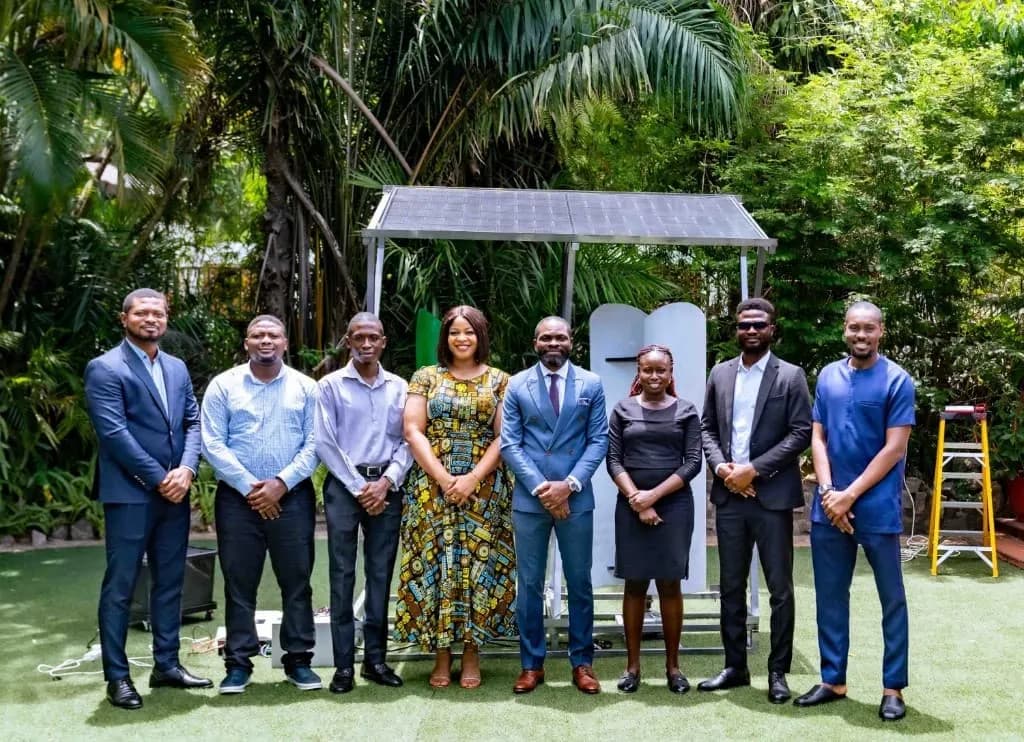
By 2023, Anfani had a shape and a pilot: six stores, one in each of Nigeria's six geopolitical zones, run in partnership with a single energy provider willing to work with a company that didn't have a track record yet. A financier was the piece still missing, and without one, the whole brokerage model had nowhere to stand. Anfani could line up a business that wanted solar and a provider who could install it, but neither side moves without someone willing to fund the gap between wanting power and affording it. When Ishaq approached financiers, they kept giving him the same passive response: come back in six months to a year. He read that as a polite way of telling him to put his own money where his mouth was. So Anfani became its own financier for its first round of solutions, funding deals itself.
Trust, paid for upfront
This decision shaped how Anfani thinks about trust more broadly. Solar had a credibility problem in Nigeria that predated Anfani by years: businesses who'd been sold systems that failed within weeks, on technology that's supposed to last decades. Anfani's answer was to absorb some of the risk itself. Early customers weren't asked to pay for the first three months, giving them time to watch a system work before committing money to it. Where a customer had been burned by a previous installation, Anfani's approach was to diagnose the specific failure, whether that's bad cabling, bad panels, or a bad install, and fix it. Cheap doesn't last, as Ishaq put it, and Anfani decided early that solving for affordability without also solving for quality wasn't going to solve anything.
None of the trust got built through marketing either. Ishaq made a deliberate call early on to stay off radio and television, worried that advertising a solution before they could deliver results at scale would just put people on a waiting list and burn goodwill they hadn't earned yet. Instead, Anfani chose its first installations strategically: visible, well-trafficked locations where a business could keep its lights on through an outage while neighbours noticed. That became the proof sitting in plain sight. Customer education did the rest of the work: some businesses got a plain explanation of how the system worked, others got trained to do basic maintenance themselves, which cost Anfani time it wouldn't see reflected on a balance sheet but paid off in customers who understood what they'd bought.
Trust, in a market that's already been burned, isn't something you can claim your way into. It has to be demonstrated, usually at the company's own expense, before a customer will believe in it. Waiving payment, fixing root causes instead of reselling, letting the product speak for itself in public rather than in an ad: each of those cost Anfani something upfront. That's what most growth advice skips past. The fastest way to build credibility in a sceptical market is very often the slowest, most expensive way to do it.
Patient capital
Most Oxford MBA founders chasing a venture like this default to VC. Anfani didn't. Achieving real energy affordability while staying profitable meant offering financing terms (lower interest rates, patient repayment structures like lease-to-own or pay-as-you-go models) that needed room to prove themselves before they turned a profit. That's not a pace VC capital, by Ishaq's account, tends to tolerate. So Anfani built its funding stack differently: grants first, then high-net-worth individuals, then reinvested revenue from every deal that closed, and now a mix of development finance institutions and philanthropic capital as the business scales.
A whole street at once
The same logic shows up in how Anfani has started to sell. For its first few years, growth meant one conversation with a customer, whether a shop owner or a small business owner, and converting that into a single deal. That strategy worked, and direct conversations are still how the company largely operates. But it grows linearly, and by the end of 2025 Ishaq was asking the question: how do they keep doing the thing that works with these businesses while producing bigger results? It's a fundamental dilemma for any startup building trust with customers while running on a lean team.
His answer came in two parts. The first was standardisation: building out a handful of repeatable solution types so that a new customer, financier, or provider could be slotted into an existing structure rather than negotiated from scratch each time. The second was what Ishaq calls cluster financing. Instead of approaching individual businesses, Anfani now goes to associations, cooperatives, and trade bodies, or to entire geographic clusters. The goal is to power a whole street through one conversation instead of twenty separate ones.
Anfani kept the conversation approach but changed who was in the room. The relationship-heavy approach, they figured, wasn't really the bottleneck; the size of the counterparty was.
Why Nigeria
It would be easy to read Anfani's focus on Nigeria as a matter of sentiment: a founder building something for the country he grew up in. Ishaq doesn't deny that part of it. But he's quick to frame the choice in harder terms.
“Nigeria is the most populous Black nation in the world, and the most populous country in Africa, which makes for a genuinely large addressable market. It's also a country of enormous internal complexity, with hundreds of languages and cultures inside its borders. Whatever works there stands a good chance of working almost anywhere else on the continent.”
Four years after that afternoon in Abidjan, Anfani is still a Nigeria-first company, with early conversations underway in a handful of other African markets and a separate, more digitally focused arm taking shape in the UK, the country that equipped him with the network and skills to bring this business to life. Ishaq doesn't talk about the scale of that ambition as if it's a settled thing, but the way most founders talk about the exciting challenges that keep them up at night.
“If your dreams don't scare you,” he said, “they're not big enough.”
This article was written by Nessie Chu-Heng Lu, Strategic Marketing Lead, Founders & Funders.
About the Builder
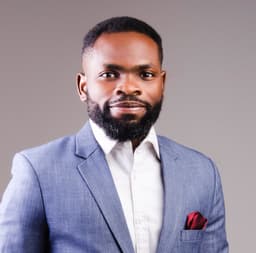
Ishaq Bolarinwa
Founder and CEO, Anfani
Ishaq Bolarinwa is the Founder and CEO of Anfani, an energy finance and infrastructure company working to make reliable clean energy more accessible and affordable for businesses and communities across Africa. An engineer and Oxford MBA, Ishaq spent more than a decade in the energy sector, including roles at ExxonMobil and Chevron, before founding Anfani in 2022.
Apart from Anfani, Ishaq's broader work sits at the intersection of energy, finance, technology, and economic development, with a particular focus on building commercially sustainable solutions to Africa's infrastructure challenges.