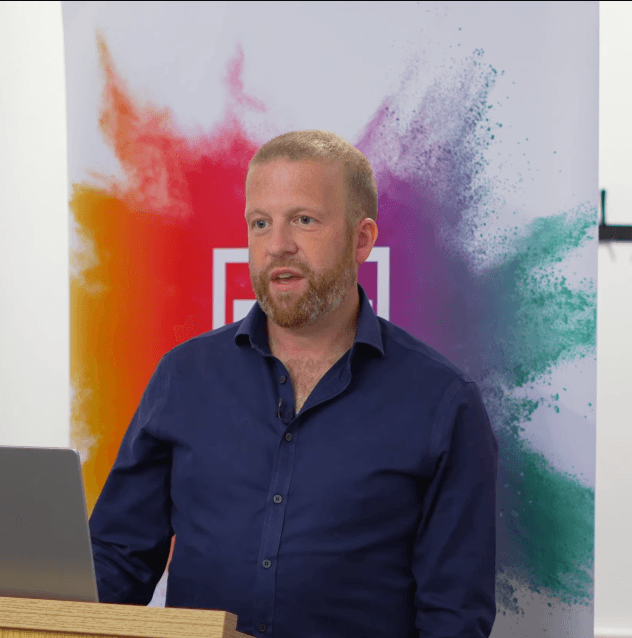
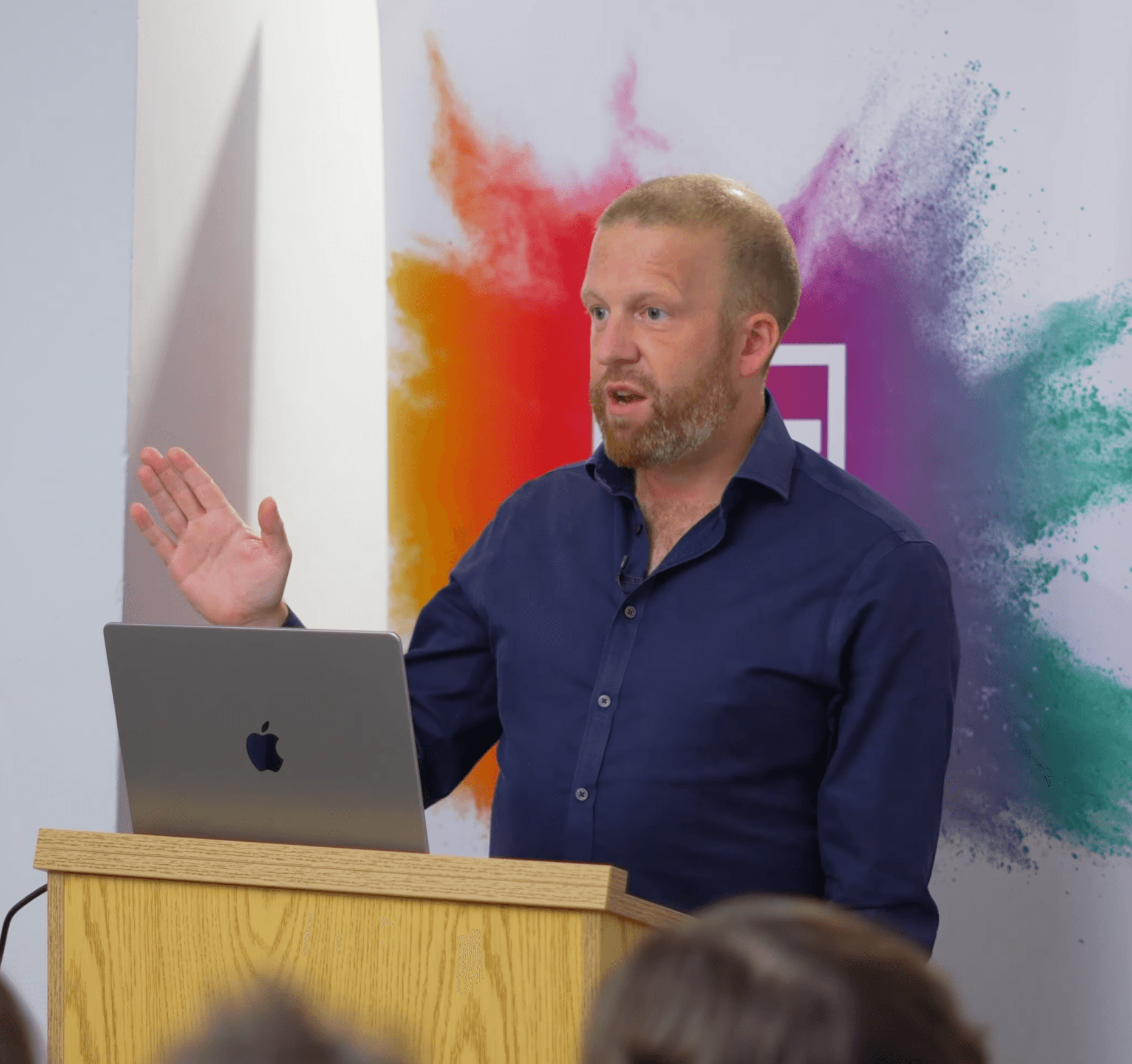
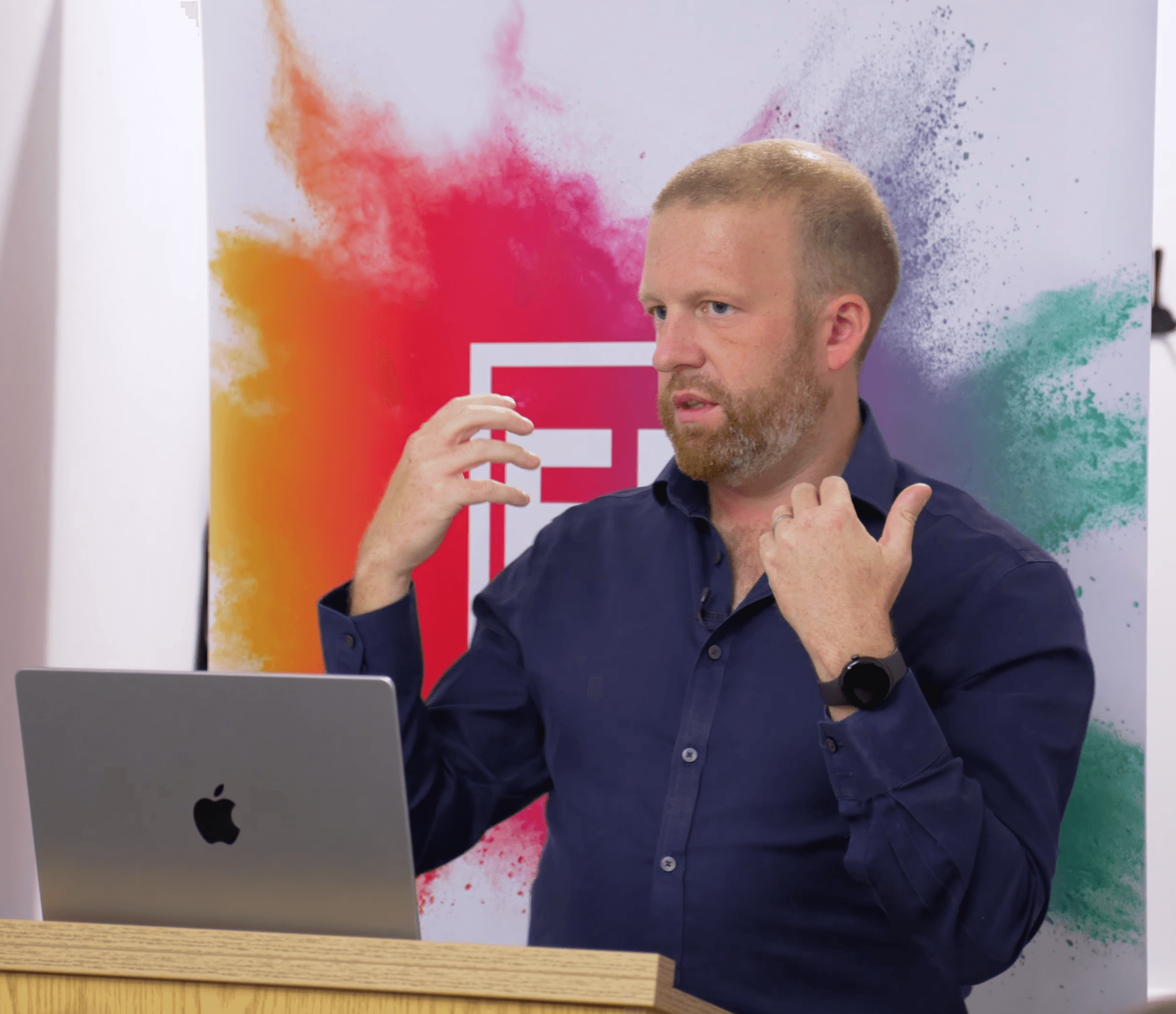
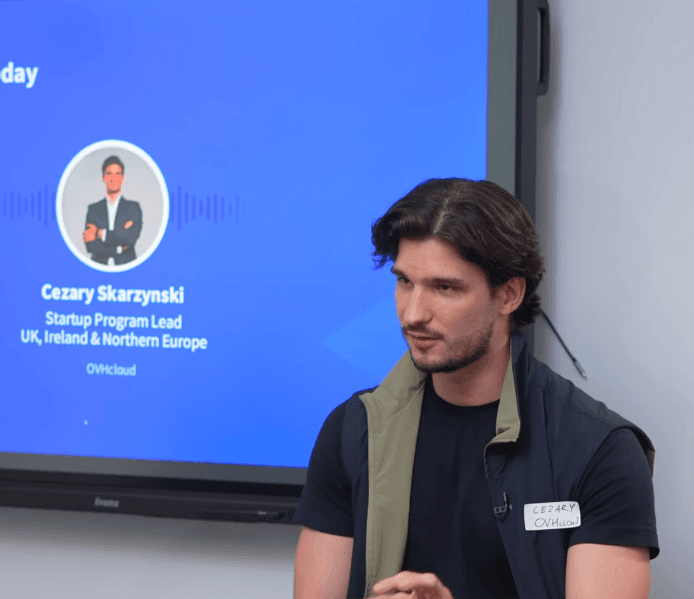
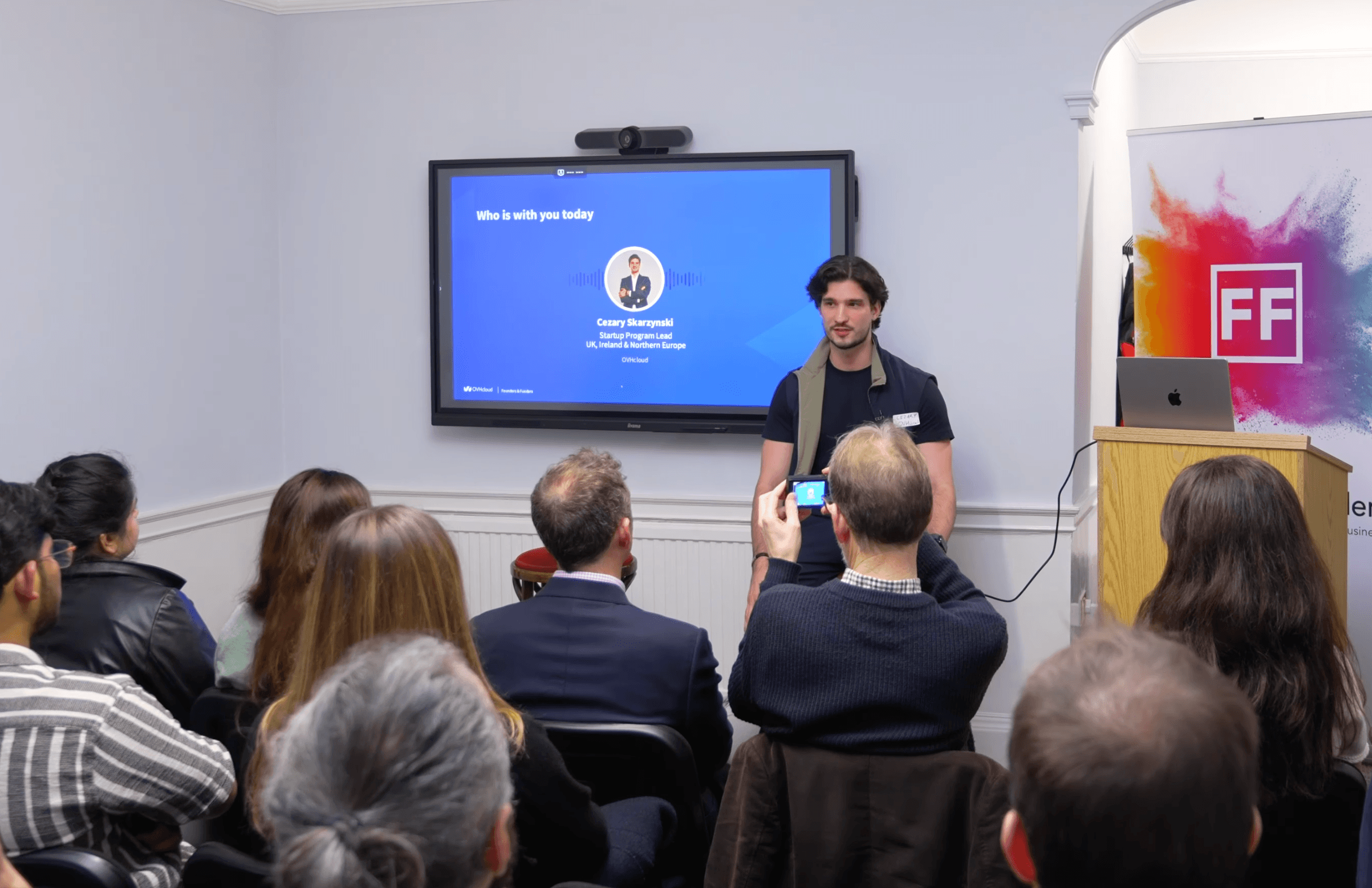
Ian Hardingham did something most founders avoid on stage: he talked about the failure. His first product took three years to build and has earned roughly £2,500 to date. He said so plainly, without flinching. Hardingham is now Chief Technology Officer of Oxford Brain Diagnostics, an Oxford spinout working on dementia, but he built his career in video games. We had paired him with Cezary Skarżyński, who runs the startup programme at OVHcloud, the largest European cloud provider, expecting two unrelated talks, one on neuropathology and one on European cloud. What we got instead was a single, unfashionable argument made twice, from opposite ends of the technology world: that the value left to capture is moving toward the markets others have abandoned, or not yet dared to enter. The lesson we took most seriously was about patience, the discipline of choosing markets and timelines the herd has overlooked.
In Brief
- 01
Two speakers converged on the same unfashionable virtue. Cezary Skarżyński of OVHcloud and Ian Hardingham of Oxford Brain Diagnostics both pointed toward patience in markets others have abandoned or not yet reached.
- 02
Hardingham's account of a three-year first product that earned roughly £2,500 is a useful corrective to survivorship bias. The failure, not the later success, is where the transferable lessons sit.
- 03
Saturation is the founder’s real enemy. His telling detail, a shift from a handful of weekly launches on Steam to dozens a day, is a parable about why the obvious market is rarely the right one.
- 04
In dementia, the binding constraint is not ambition but measurement. Drugs must be tested on patients before symptoms appear, which is precisely when the disease is hardest to see.
- 05
For early-stage founders, infrastructure economics are now a strategic variable, not a back-office one. Free or near-free compute and a named human on the other end of the line change what a small team can credibly attempt.
Why This Matters Now
The current founder narrative rewards speed and crowds. Anyone can now spin up a company with a few prompts and reach the entire world by lunchtime, a point Hardingham made with some wonder, having begun his own career when games still travelled across Europe in the backs of trucks. But the same forces that lower the cost of starting also raise the cost of standing out. When a storefront goes from three new products a week to fifty a day, the scarce resource is no longer the ability to build; it is the judgement to build something in a place where you can still be seen.
That judgement was the through-line of the evening. One speaker had spent fifteen years learning it the hard way in games and publishing; the other was applying it to a disease that has humbled the largest pharmaceutical companies in the world. The stakes there are not abstract: the Alzheimer's Society estimates that 55 million people live with dementia worldwide, and that one in three people born today will develop it in their lifetime. Neither speaker was selling a shortcut.
The Central Question
The tension worth sitting with is this: in a world that prizes the fast and the crowded, where does durable value actually accrue? The two ventures on stage answered, implicitly, in the same direction, toward the patient and the unsaturated. But they reached it from opposite ends. One had survived a market collapsing into saturation; the other had deliberately chosen a market defined by its difficulty. Read together, they make a sharper claim than either made alone: the hardest markets and the longest timelines are not obstacles to value but, increasingly, the only places it is left to capture.
Key Insights
What we took from the room
Failure is the part of the story worth studying
Hardingham was unusually candid about beginnings. His first product took three years to make and, by his own reckoning, has earned in the order of £2,500 to date. Most founder talks skip this chapter; the survivors' later wins get all the airtime, and the audience quietly absorbs the false lesson that success is the default. What rescued the company was not the failed product but the decision that followed it: to take on contract work building live-streaming software for television, and to plough the proceeds into a second product that became a genuine success. The transferable insight is not “persevere”. It is that the right response to a failed bet is often a pragmatic detour that funds the next one, rather than doubling down on the original thesis.
“Spent three years making our first product and it was a massive failure.”
Saturation, not competition, is what kills
Competition is normal; saturation is fatal. Hardingham's sharpest observation was about what happened to digital game distribution over a decade, from roughly three new titles a week when his company launched to around fifty a day now. The point generalises well beyond games. Most founders intuitively chase the market that is visibly growing, which is precisely the market everyone else can also see. The more useful discipline, as he framed it, is to keep hunting for the areas that are not yet saturated, the places where a small team can still make a difference. That instinct is what eventually pulled him out of games entirely and toward medicine.
“Back when we launched our first game, there were three new products launched on Steam every week. Now, there are 50 new products every day.”
In hard science, the constraint is measurement
The reason dementia has defeated so much capital is not lack of effort. As Hardingham described it, the processes that lead to cognitive impairment can begin in the body many years, as many as fifteen, before symptoms appear, and the time to treat the disease is generally before those symptoms arrive. That creates a brutal evaluation problem: to prove a drug works, you must test it on people who are pre-symptomatic, when the disease is by definition almost invisible. Conventional structural scans, he noted, struggle to distinguish atrophy caused by Alzheimer's from the ordinary shrinkage of ageing. Oxford Brain Diagnostics' approach is to model how microscopic water should move in a healthy brain and compare it against a diffusion scan of the real one, surfacing microstructural change that the eye cannot read from an image. Whether or not that specific method prevails, the strategic lesson holds: in deep science, the company that solves the measurement bottleneck often unlocks the whole field.
OBD's public record supports the seriousness of the bet. The company was founded in 2019 by Dr Steven Chance and Professor Mark Jenkinson, its Cortical Disarray Measurement technology received FDA Breakthrough Device Designation in 2020, and its CDM Insights product secured FDA 510(k) clearance in early 2025, the regulatory milestones Hardingham referenced from the stage.
Infrastructure has quietly become a strategic choice
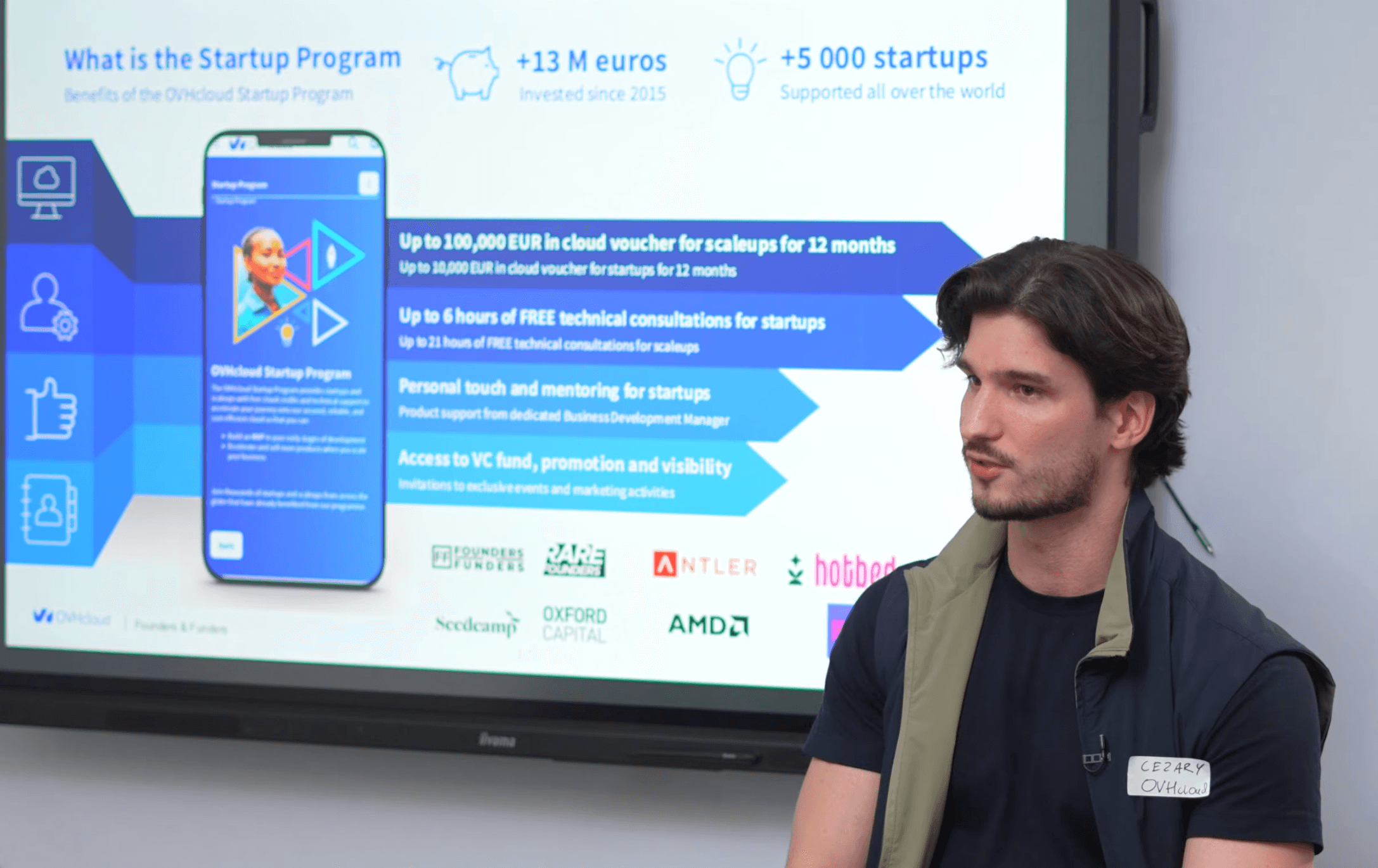
Skarżyński's pitch was, on its surface, about cloud credits. Underneath it was an argument about what early-stage founders can now attempt. OVHcloud, the leading European cloud provider, operates more than 450,000 servers across over forty data centres and serves some 1.6 million customers, scale it pairs with a deliberate emphasis on data sovereignty and EU compliance, a positioning that matters more, not less, as regulation tightens. Its startup programme offers selected companies up to roughly £100,000 of free infrastructure over twelve months. For a deep-tech team running GPUs and databases, that is the difference between testing an idea and shelving it. Just as telling was Skarżyński's insistence that there is always a human being, not a bot, on the other end of the relationship. For a regulated medtech company deploying clinical software, the support relationship is part of the infrastructure, not an extra.
What To Do About It
If you are a founder
The most actionable takeaway is also the least glamorous: choose your market on the axis of saturation, not the axis of excitement. The question is not “is this space growing?” but “can a team my size still be visible here in three years?” Treat your first product as tuition rather than destiny. Budget, emotionally and financially, for the possibility that it earns almost nothing and that its real value is the contract revenue or the hard-won insight it buys you. And treat infrastructure as a lever you pull early. Programmes that hand a pre-seed company six figures of compute and a named engineer are not charity; they are a way to compress the distance between hypothesis and evidence, and founders who ignore them are quietly choosing a slower path.
If you are an early-stage investor
The evening was a reminder to underwrite measurement, not just ambition. In deep science especially, the companies worth backing are often the ones solving the unglamorous bottleneck, the diagnostic, the assay, the tool that lets everyone else run their trials, rather than the ones promising the cure itself. That demands a longer hold and a higher tolerance for the failed first product. The discipline of distinguishing a genuinely defensible position from a crowded one is, in the end, the same discipline founders need; the difference is only that capital can afford to be patient across a portfolio in a way a single founder cannot.
And for the ecosystem
The lesson we keep relearning is that the most valuable companies coming out of places like Oxford are rarely the fastest to a crowded market. They are the ones built on a decade of pathology research, or fifteen years of hard-won commercial scar tissue. An ecosystem's job is to give that kind of patience somewhere to live, which, modestly, is part of why we keep the lights on once a month.
Takeaways
The Founders & Funders Five
- 01
Your first product is tuition, not destiny. A three-year build can earn £2,500 and still be the best money you ever spent, provided it teaches you where the second product should go.
- 02
Pick markets by saturation, not by heat. Three launches a week is an opportunity; fifty a day is a trap. Ask whether a team your size can still be seen in three years.
- 03
When a market closes, fund the pivot, don’t romance the original. Contract work building TV software paid for the product that actually worked. Pragmatic detours beat heroic doubling-down.
- 04
In deep science, win the measurement, win the field. Dementia drugs fail partly because you must test them before symptoms show. Solve the diagnostic bottleneck and you unlock everyone else’s trials.
- 05
Treat cloud credits as strategy, not procurement. Six figures of free compute and a named engineer can be the line between testing an idea and abandoning it. Pull that lever before you need to.