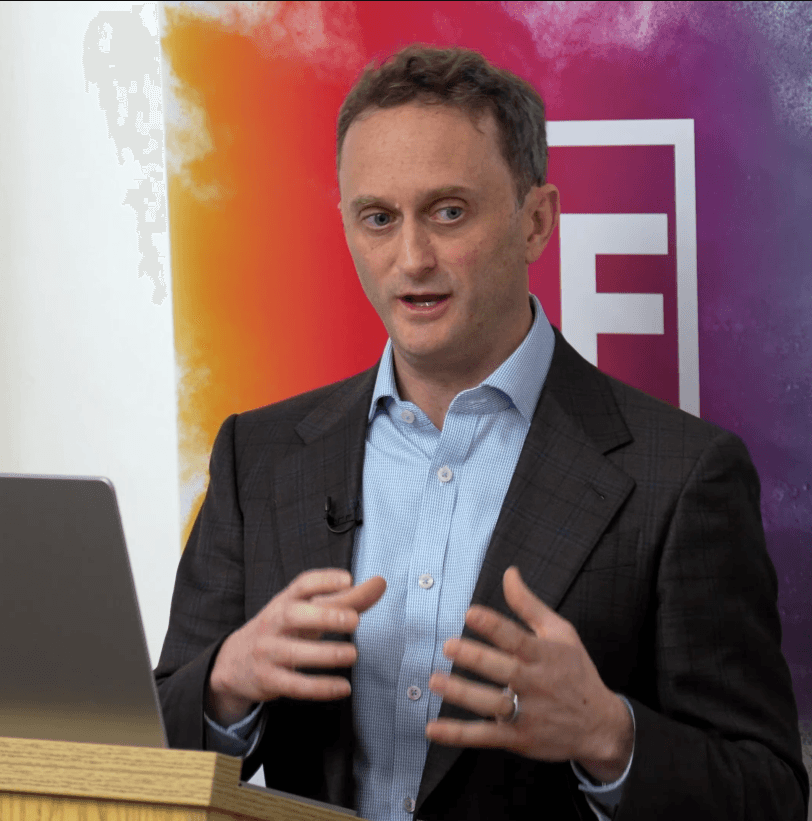
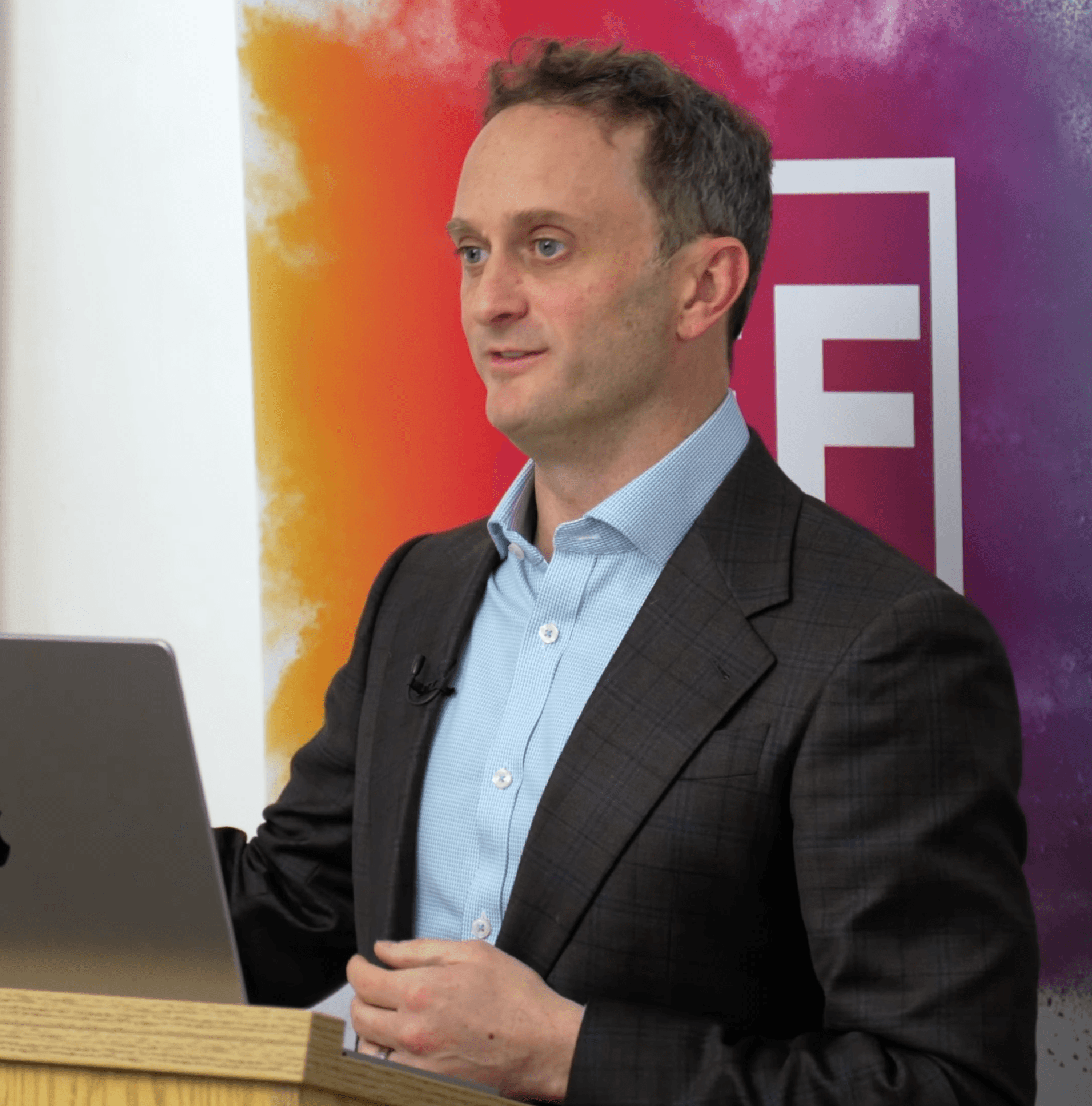
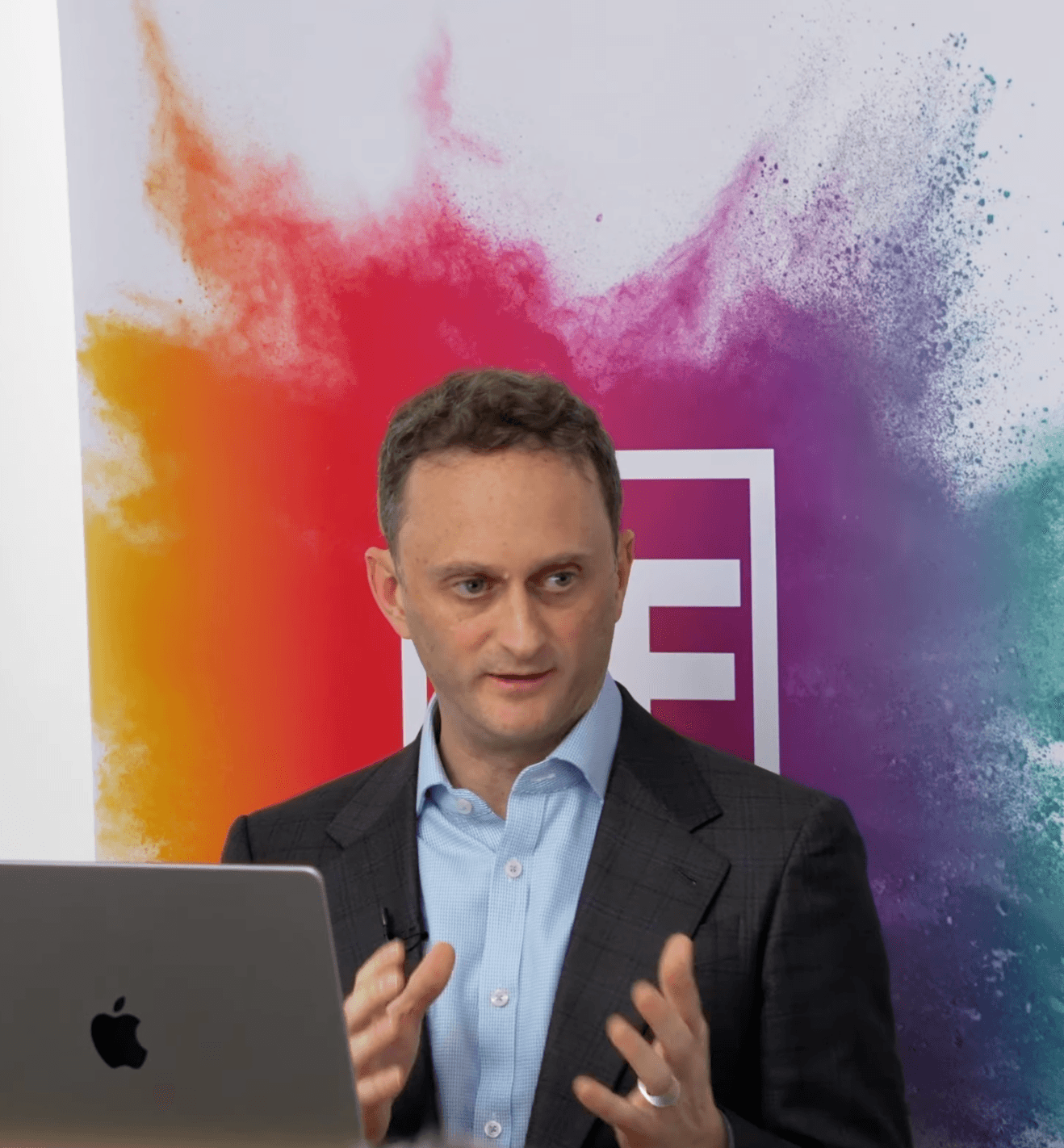
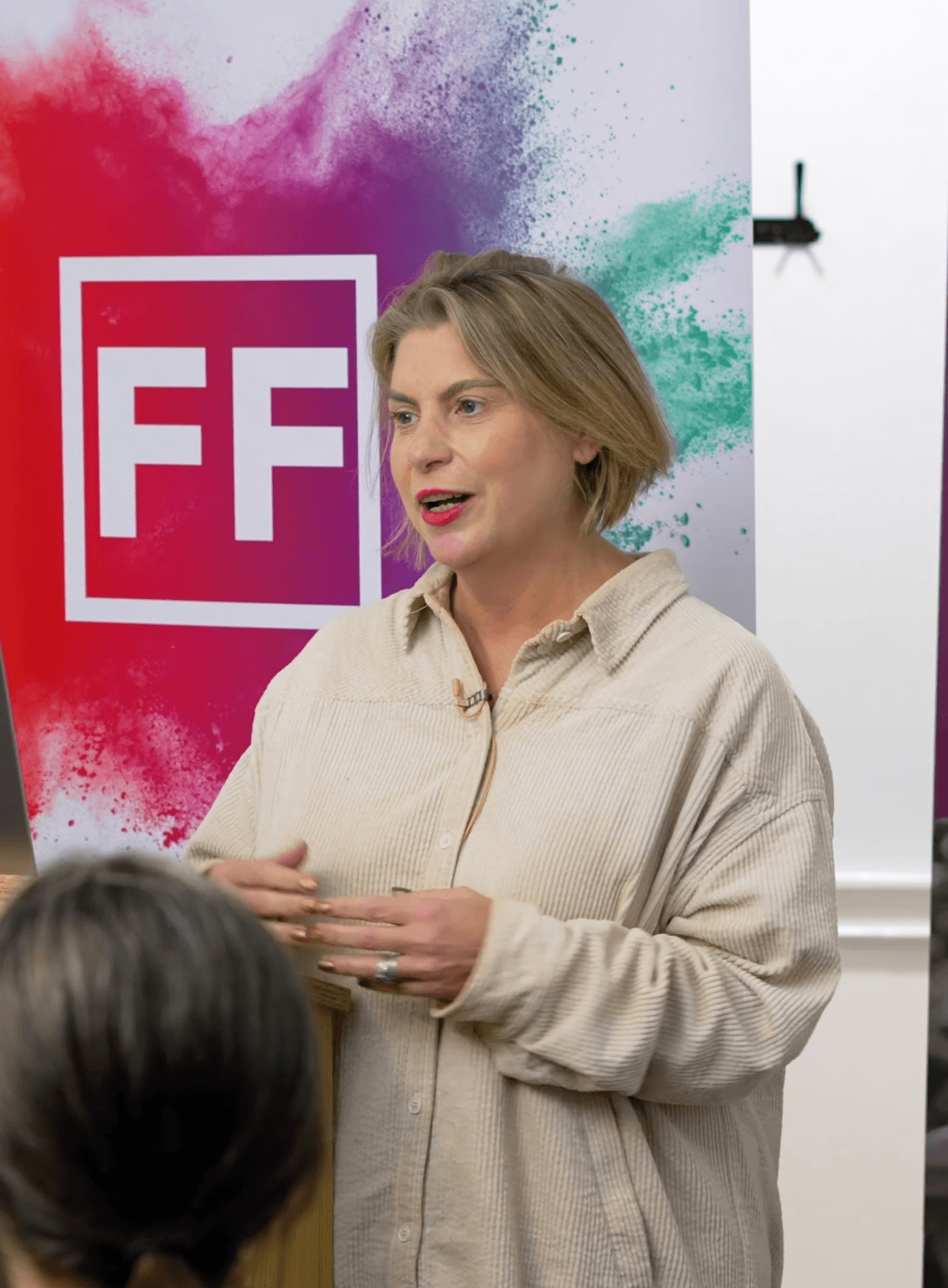
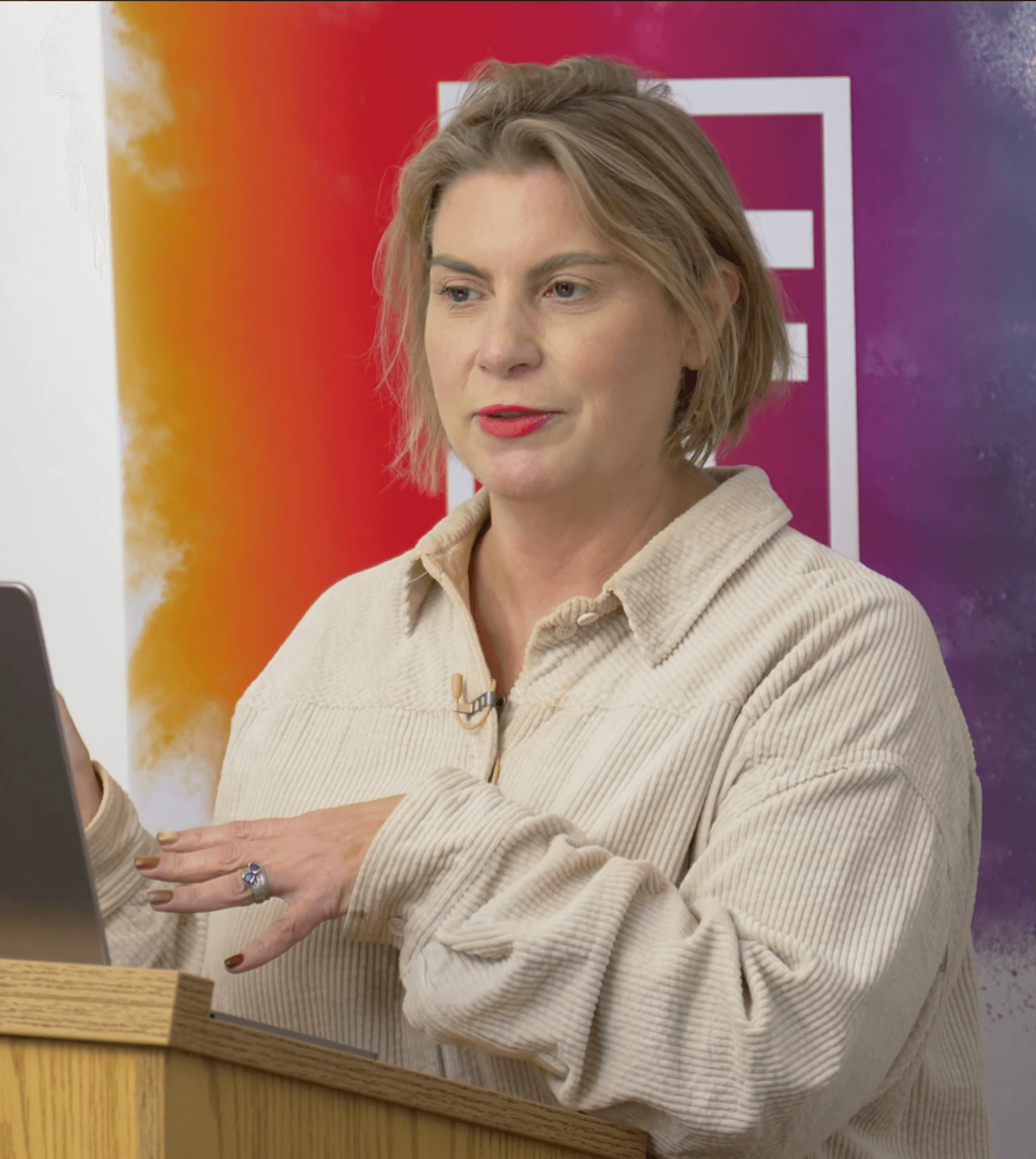
Halfway through his talk, Benny Axt put a number on Oxford's ambition. Oxford Science Enterprises, where he serves as Entrepreneur-in-Residence for Health Tech, has helped channel more than £3 billion into university spinouts over the past eleven years, launches roughly one new company each month, and expects to double that pace by 2030. He believes the first trillion-dollar company built on university research could emerge from Oxford.[1]
It is a striking prediction. Yet it points to a broader question facing research-intensive ecosystems everywhere: what does it take to transform scientific discovery into companies capable of creating lasting economic and societal value?
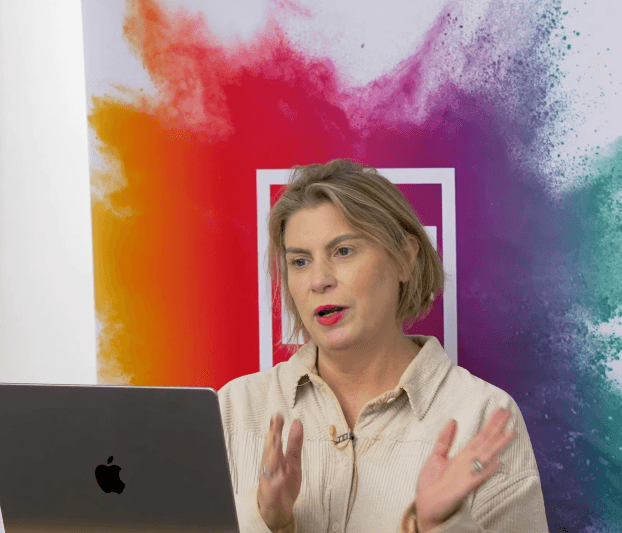
The question looks different depending on where one sits. For venture builders such as Axt, who joined OSE around the time it announced its first unicorn, the quantum computing company Oxford Ionics, since sold, the challenge is identifying technologies that deserve to become companies and helping them navigate the long journey from laboratory to market.[2] For advisers such as Nicola McConville, who leads Mishcon de Reya's Oxford office and has worked with some of the UK's most ambitious technology ventures, the challenge is helping those companies survive growth itself: structuring investment, managing risk, attracting talent, and building organisations capable of scaling.[3]
Together, their perspectives highlight a reality often overlooked in discussions about innovation. Breakthrough science is rarely the hardest part. The greater challenge is translation: turning technical insight into something that customers, investors, regulators, clinicians, and partners can understand, trust, and support. The companies that succeed are often not those with the most sophisticated technology, but those that become fluent in multiple worlds at once.
In Brief
- 01
Capital is becoming increasingly concentrated. AI attracted more than half of global venture funding in 2025, accounting for roughly three in every five dollars invested. For founders outside that wave, success is less about attracting attention and more about demonstrating enduring value and differentiated advantage.
- 02
Scientific venture creation operates on a different timescale. Oxford Science Enterprises' model reflects this reality: no fixed fund life, a commitment to building roughly one company per month, and a willingness to support ventures through the decade or more it can take frontier research to reach the market. In science-based innovation, patient capital is not a feature of the model; it is the model.
- 03
The real bottleneck is commercial translation. Most leading research ecosystems do not suffer from a shortage of ideas or even capital. The scarce resource is the ability to translate world-class science into compelling business cases, market-entry strategies, products, and teams capable of scaling.
- 04
Capital influences strategy. As investor interest shifts towards areas such as defence, resilience, and strategic technologies, founders increasingly adapt not only their narratives but also their governance structures, partnerships, and operating models. Funding priorities can quietly reshape the trajectory of an entire company.
- 05
Communication remains an underappreciated advantage. Whether raising capital, negotiating term sheets, building partnerships, or recruiting talent, founders who can explain complex ideas in clear language often outperform those who rely on technical sophistication alone. In an ecosystem crowded with expertise, clarity is a competitive edge.
Why This Matters Now
The macro backdrop is a market that has rarely been less evenly distributed. Axt described a healthy rebound in venture funding through 2025, with one quarter alone exceeding the whole of 2024, alongside climbing valuations and a record number of companies being sold, many of them liquidity-driven trades by founders who have accepted they will not reach an IPO. The dominant fact, though, is concentration. More than two hundred billion dollars went into AI startups in 2025, the bulk of it in mega-rounds; OpenAI and Anthropic alone absorbed sums that a decade ago would have funded an entire national ecosystem.[4]
That concentration is what sharpens the clock problem. When most of the capital and nearly all of the attention chase a handful of fast-moving bets, the pressure on everyone else is to behave as though they are on the same timetable: to pivot toward what is being funded, to accept terms that look normal in a frothy market, to raise on someone else's schedule rather than the science's. The interesting question for the room was therefore not how to join the stampede but how to build durable things while it passes, and that is largely a question of whose clock you agree to run on. Both speakers, in different registers, were answering it.
The central tension: velocity against patience
It is worth being precise about why the two clocks cannot simply be averaged. They do not just run at different speeds; they demand contradictory things. The capital clock rewards the visible milestone, the next round, the marker that lets an investor mark up the position and move on. The science clock rewards the unglamorous middle, the years that produce no marketable event but without which there is no company at all. A founder who serves the first too faithfully starves the second, and the failure tends to surface late, when it is expensive to repair. Axt and McConville, from the operating and legal seats respectively, were each describing how to hold the two in tension rather than letting the louder one win by default.
Key Insights
What the evening actually taught
Patience is an architecture, not a virtue
OSE's structure is the clearest expression of the patient-capital thesis in the UK. It holds investments without a fixed fund life, which means it can support a company from pre-seed to exit without the timer that forces most funds to sell. Axt framed the cadence plainly, one new company built roughly every month, with the velocity expected to double by 2030, and a portfolio that on its own account already contains companies in the long tail of fifty-plus future exits.[5]
The lesson for founders is not that they should go and find permanent capital, which most cannot. It is that the shape of your funding determines the shape of your company. If your backer must return capital on a schedule, your strategy will bend to that schedule whether or not the science is ready. Choosing investors is, in part, choosing which clock you will run on. That is a more consequential decision than valuation, and it is made early, often without much thought.
“The more that I learn, the less that I know.”
The bottleneck is translation, not invention
Axt was disarmingly direct about his own role. He is not a scientist or a researcher; the university, as he put it, is chalk full of those. What he brings is the commercial angle: writing business cases, thinking through market-entry strategy, building teams. The unmet need he kept returning to was the connective tissue between groundbreaking research and a venture that can carry it to patients. He is hunting for academic co-founders in oncology and mental health, and was willing to pay, offering a small finder's prize, lunch, for an introduction that catalyses a new company.
This matters because ecosystems systematically over-value the lab and under-value the translation. The national picture bears Axt out: when the government opened the first £9m round of its proof-of-concept fund, the scheme created precisely to help academics turn research into a fundable company, it drew around 2,750 expressions of interest and backed 48 projects, roughly thirty times oversubscribed; an independent review for UK Research and Innovation judged the wider £40m commitment small against international peers and called for £100m a year.[6] Oxford does not have a shortage of brilliant science. It has a shortage of operators who can sit beside a brilliant scientist and answer the questions the science never asks: who pays, why now, what is the wedge, who runs it. For researchers, the implication is that a commercial partner is not a dilution of the work but the thing that lets the work leave the building. For investors, the scarce, fundable asset is often the founding team's commercial spine, not the patent.
Follow the money and it will quietly rewrite your company
McConville offered a sharp observation about incentives. Companies that two or three years ago insisted, during their security clearances, that they had absolutely no defence application have suddenly discovered one, because defence is where the funding now is. The result is a wave of pivots into dual-use, and dual-use carries consequences that founders rarely price in: not just where the money comes from, but how you are permitted to contract, what you must disclose, and how differently a defence-adjacent company is governed compared with a life-sciences or quantum one.
The honest reading is that capital is a current, and a current moves you whether or not you are steering. Chasing a hot funding theme is not free; it can re-shape the legal and commercial DNA of the business in ways that are expensive to reverse. The discipline is to decide deliberately whether the pivot serves the company, rather than letting the availability of money make the decision by default.
Plain language is a founder's cheapest defence
Both speakers, independently, kept coming back to language. McConville's team publishes a founders' handbook written in deliberately plain English, with a glossary that de-jargons the alphabet soup, SEIS, EIS, EMI, that lawyers and investors use as if everyone shares it. She runs free structuring workshops because, in her account, the early mistakes that hurt most are not exotic; they are founders not understanding the difference between a director and a shareholder, or how a shareholders' agreement reaches into their personal will.
The defensive version of the same point is about term sheets. McConville's firm sees a large volume of funding rounds a year, and has noticed that founders are routinely told a term is market, normal, or simply standard. Her response is that something is standard until it is not, and that the only protection is to have someone who reads enough term sheets to know the difference. The takeaway for founders is unglamorous and valuable: the word “standard” is a negotiating tactic, not a fact, and the antidote is comparative knowledge you either build or borrow.
“‘That’s standard’ is something investors may say. The skill is knowing when it’s true and when it isn’t, before you sign.”
What To Do About It
If you are a founder
Choose your clock before you choose your valuation. Ask what your prospective investor's fund life is and what that implies for when they will need you to sell; a higher number on a term sheet from an impatient fund can be worth less than a lower one from a patient backer. Treat the word “standard” as the opening of a negotiation, not the end of one, and get a second pair of eyes on every term sheet from someone who sees many. And if your strength is science, go looking deliberately for a commercial co-founder rather than hoping the market will supply one; that person is the difference between a paper and a company.
If you are an early-stage investor
The concentration of capital into AI is an opportunity for everyone willing to underwrite what the crowd is ignoring. The fundable scarcity at a place like Oxford is commercial translation: back the teams that pair deep science with an operator who can write the business case, and be honest that these companies run on a decade-long clock that your fund structure may not natively tolerate. If you cannot hold for that long, say so early, because the mismatch surfaces painfully at exit rather than at entry.
If you are a university, ecosystem builder or policymaker
Our own observation, from running this series, is that the binding constraint on Oxford's commercial output is not the supply of science or even of money; it is the thin layer of people and plain-language infrastructure that connects the two. The cheapest high-leverage intervention is not another fund. It is more translators, more honest glossaries, and more rooms in which a scientist and an operator can meet without a deck. That is unfashionable to fund and it is exactly where the marginal pound does most work.
Takeaways
The Founders & Funders Five
- 01
Pick the clock, not the cheque. Your investor's fund life dictates when you must sell. A patient backer at a lower valuation can beat an impatient one at a higher number.
- 02
"Standard" is a tactic, not a fact. A term is market until it isn't. The only defence is comparative knowledge, built or borrowed from someone who reads hundreds of term sheets.
- 03
The scarce asset is the translator. Oxford has no shortage of science. It has a shortage of operators who can answer who pays, why now, and who runs it.
- 04
Hot money re-codes your company. Pivoting toward where funding flows, defence today, changes how you contract and govern, not just who pays. Decide deliberately.
- 05
Jargon is a moat that works against you. The costly early mistakes are basic: director versus shareholder, the reach of a shareholders’ agreement. Demand plain English and a glossary.
Watch the Full Conversation
To hear the full discussion and explore additional insights from Oxford's innovation ecosystem, watch the complete conversation on YouTube.
Sources
- [1]Oxford Science Enterprises, "What we do," states that OSE and its co-investors have together invested more than £3bn; the firm builds new companies on a roughly monthly cadence. oxfordscienceenterprises.com/what
- [2]Oxford Ionics, an OSE portfolio company, was acquired in 2025 in a deal reported at over $1bn, one of the largest acquisitions of a UK deep-tech spinout.
- [3]On Mishcon de Reya's work with major UK technology ventures: Mishcon de Reya advised Wayve on its landmark $1.05 billion Series C funding round, described as the largest known investment in a European AI company to date.
- [4]AI firms took roughly 50–61% of global VC in 2025 (totals of c.$211–259bn depending on definition), with US AI share above 60%; Anthropic raised $13bn. Sources: Crunchbase, OECD.
- [5]Portfolio scale, exit count and forecast figures are as stated by Benny Axt on stage and reflect OSE's internal forecasts; public OSE materials confirm a portfolio of 80-plus companies with two IPOs and several trade exits to date.
- [6]UK Research and Innovation proof-of-concept fund: the first £9m round drew c.2,750 expressions of interest and funded 48 projects; the £40m/five-year commitment was judged small against international peers by the Hickson Review for UKRI, which recommended £100m a year.